The Age of Ancient Chinese Gods – a Modern Chinese style Song

The age of ancient Chinese gods is an original Chinese song with the theme of ancient Chinese mythology mainly cover the content span from the creation period (tribe) to the mythological dynasty (Shang and Zhou dynasty). The singer of this song is Fei ZaoJun.

The following is the link to listen this song.

The lyrics of the song is very powerful and unique.

Here is the Chinese version of the lyrics and I will explain them.

吞吐间是云水泱泱
指尖上是尘土茫茫
我检点五千转飞光
太初混沌一双明目启张
This paragraph explains that the storyteller looked through Chinese history and gonna start the history journey with audience.
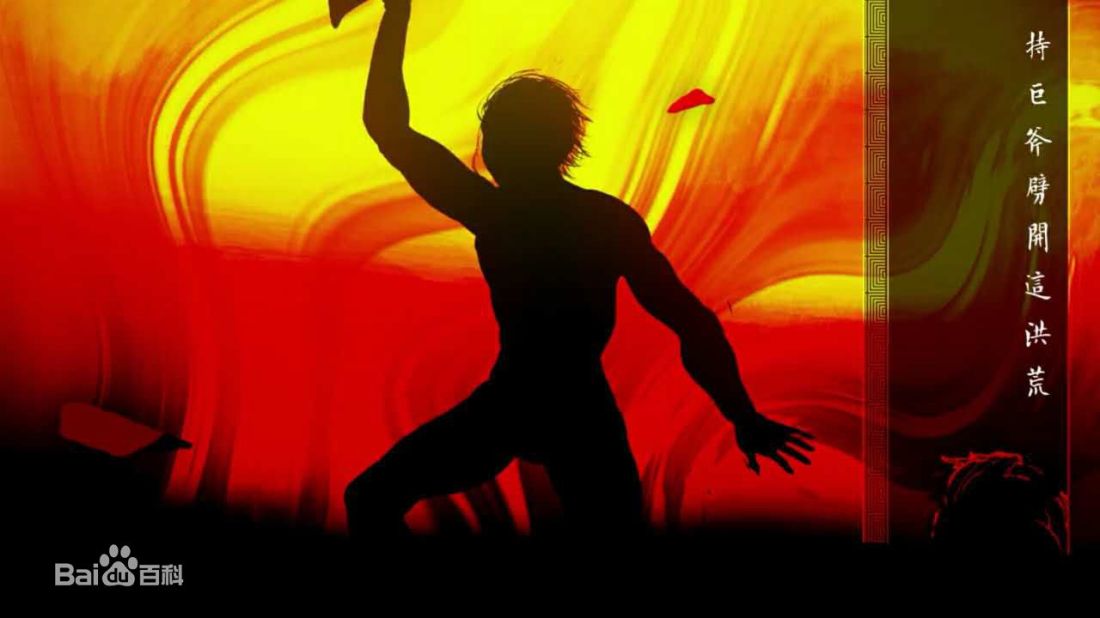
持巨斧劈开这洪荒

开宇疆以叩问三皇

谁将我在琅环阁藏
二十四朝能纳多少篇章
Pangu who is the creator of the world used the ax to smash the world out and asked three gods who are Nvwa, Fuxi and Shennong where is the library and in all of the twenty-four Chinese dynasties how many biographies are there?
Here is a picture of Pangu
盘古
天东有若木
钟山有赤龙衔烛
烧热华夏子民的五脏六腑
In the east side, there is wood. In the Zhong mountain, the fire dragon is making fire. The fire is heating up all the Chinese people.
Here is a picture of fire dragon
烛九阴
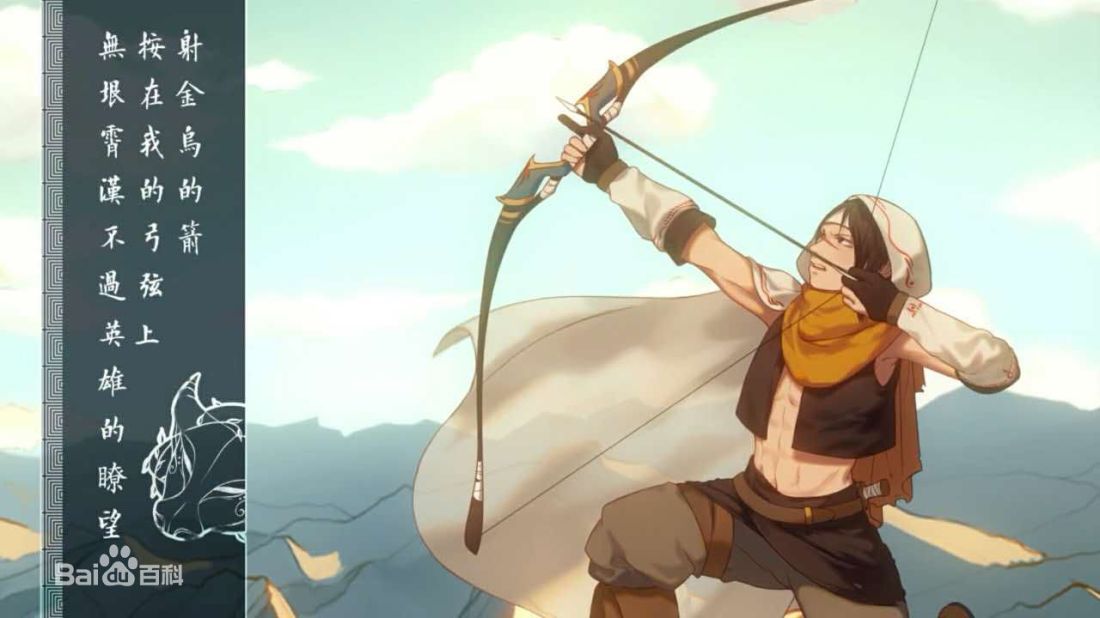
射金乌的箭
按在我的弓弦上
无垠霄汉不过英雄的瞭望
There was a time when there were nine suns in the world and people were suffered from this. The hero Hou Yi shot the other eight suns and kept one sun to save the world.
Here is a picture of Hou Yi
后羿
焉有火光 取星辰之辉来耀四方
尝百草也豪饮大泽河渭汤汤
Shennong is a doctor and he tried many medicine to know the functions of them.
Here is a picture of Shennong
神农
斩断鳌足 立天柱万仞以正玄黄
如今它 仍旧是我挺直的脊梁
The goddess Nvwa used a turtle to keep up the sky.
Here is a picture of Nvwa
女娲
鱼龙阵内 我金戈既出无人不降
一战死 留英魂常镇八方万邦
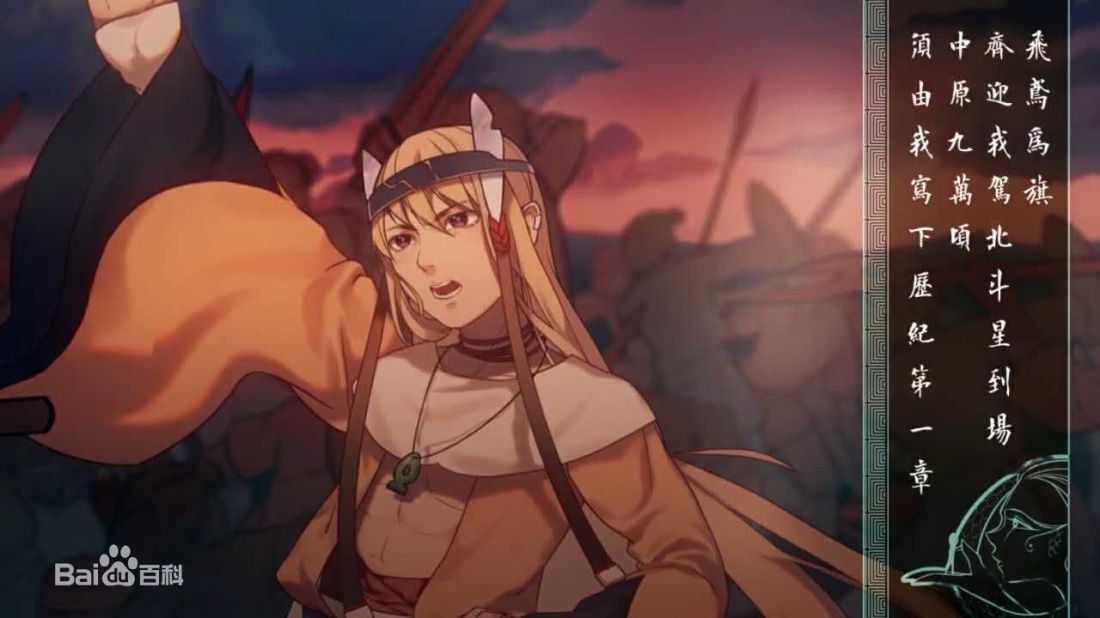
飞鸢为旗 齐迎我驾北斗星到场
中原九万顷 须由我写下历纪第一章
Chiyou and Huangdi had a war in the ancient time and Chiyou was beat by Huangdi. The people who followed Chiyou wanted to start a rebellion but Huangdi showed the statue of Chiyou and then the rebellion was stopped. Huangdi used star to get directions in the heavy fog during the war.
Here are pictures of Chiyou and Huangdi.
蚩尤
黄帝 

访昆仑也涉西山淇
曾路过彩绘的画壁
或寻至碑铭的典籍
饮罢乾坤喉头犹有热气
常羊山拾一把干戚
Xingtian was a god who fought with Huangdi to win the dominion and failed. He the stayed in Changyang mountain.
Here is a picture of Xingtian
刑天
九天上乘雾见玄女
Jiutian Xuannv is the goddess who knows the art of war and she is the mentor of Huangdi.
Here is a picture of Jiutian Xuannv.
九天玄女
骑红鲤在龙门游弋
造三千字道破一点天机
Cangjie created Chinese characters.
Here is the picture of Cangjie.
仓颉
杜若含秋光
九歌一梦起湘江
This is the love story between Xiangjvn and Xiangfuren.
Here is the picture of Xiangfuren.
湘夫人
它在华夏子民血脉中流长
七弦琴悠扬
我共河伯醉一场
借问那玉佩是否还在洛阳
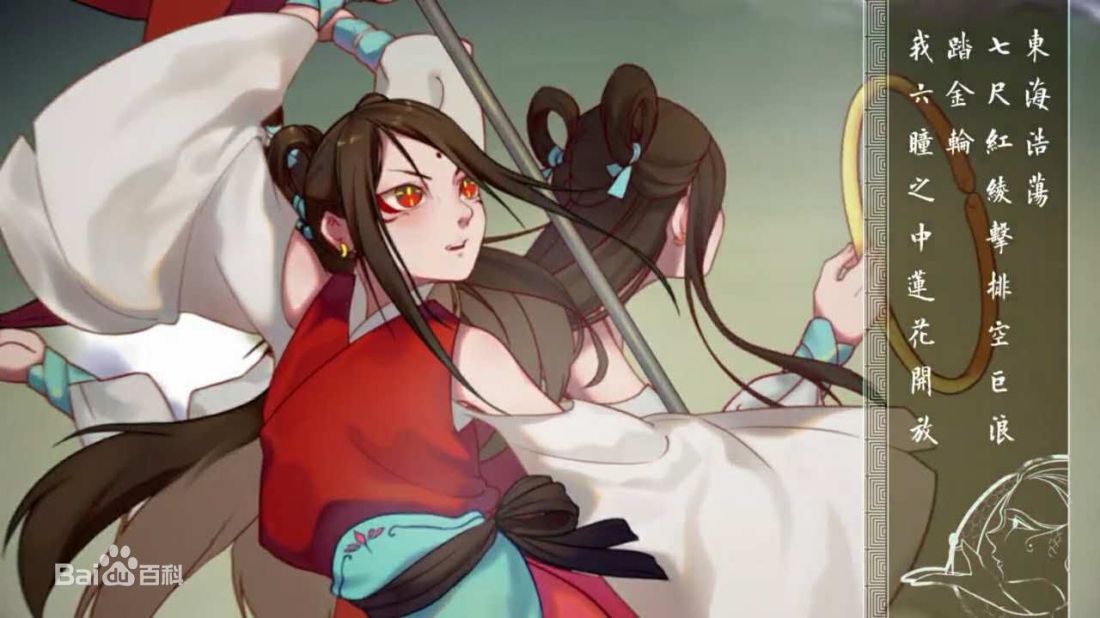
东海浩荡 七尺红绫击排空巨浪
踏金轮 我六瞳之中莲花开放
翅下风雷 芒角昭昭封我为大将
Nezha and Leizhenzi are the heroes in the establishment of Zhou Dynasty.
Here are the pictures of Nazha and Leizhenzi.
哪吒雷震子
登云行 石烂松枯也不过片晌
三更点灯 照夜来白额猛虎入帐
出岐山 我抬头看见彩凤飞降
Emperor Zhouwen had really good politics and brought good living to people.
Here is the picture of emperor Zhouwen.
周文王
招妖幡动 众精怪俯首称我为王
列宿次第开 该由我揭下封神第一榜
Jiangziya was the adviser of Emperor Zhouwen.
Here is a picture of Jiangziya
姜子牙
羲和的金车走了多长
望舒御月去了何方
Xihe is the god who controls sun and Wangshu is the goddess who controls moon.
Here is the picture of Xihe and Wangshu.
羲和望舒
我上游银河下走大荒
十二楼听谁将故事弹唱
神话世代 眨眼间曲折成了回廊
千载后 它是我掌心里的纹章
英雄过往 或斑驳在朱漆的画堂
但也在 这山高海阔天地苍茫
焉有火光 取星辰之辉来耀四方
中原上 谁扬鞭策得历纪开章
东海浩荡 七尺红绫击排空巨浪
列宿下 谁留名封神台前金榜
行过昆仑 壶中日月把浊酒温烫
借热意 我笔下漫书琅环典藏
披览篇章 遁入传奇作一番荒唐
溯回五千年任由我自诩万古第一狂
This paragraph explains the admire of the Chinese ancient myths and the pride to be a Chinese.

Introduction of Big Fish & Begonia and Its Theme Music – Big Fish

The movie Big Fish & Begonia is an animation which based on Chinese traditional fairy tale which produced and directed by Liang Xuan and Zhang Chun.

In the animation, a girl named Chun is from an underneath realm where people have to go to normal human world to experience and grow up in normal human world. Instead of human being, Chun presents  in a form of dolphin in the normal human world and in normal human world, Chun got to know a human boy who saved her in a storm. Then Chun went back to her world with the ocarina that the boy gave her.

In Chun’s world she knows that the boy died for saving her life. Chun bargains with the soul keeper, a resident of her world who collects virtuous departed souls from the human world, to return the boy to life. The soul keeper takes half of her lifespan in exchange for giving her the boy’s soul, which has manifested in this world in the form of a baby dolphin. He advises her that she must nurture the dolphin to adulthood in order to return the boy’s soul to the human world. Qiu, Chun’s childhood friend, discovers her undertaking; since beings from the human world are forbidden, he promises to help her keep her task secret. Together, they name the dolphin Kun, after a massive fish of legend.

As Kun grows bigger and bigger, Chun and Qiu can’t hide the dolphin anymore. People in Chun’s world know the existence of Kun and afraid that Kun would bring penalty for them. At last, Qiu sacrificed his life to help Chun save the life of Kun. Kun got back to human world as a normal boy again.

The theme music of this movie called Big Fish is a heat. Singer Shen Zhou voice is like the underneath water world and bring audience to the imaginary realm.

Here is some posters of Big Fish & Begonia.

Here is a trailer of Big Fish & Begonia:

Chinese traditional dance: Jinghong Dance

Jinghong dance originated in Tang dynasty, it’s already disappeared nowadays. This dance became famous as Mei consort performed it during Tang dynasty.

There is no specific movement in Jinghong dance. Jinghong dance uses abstract method to express the feminine of the dancer. There is also a belief that Jinghong dance is enlightened by the movements of goose.

A poem was written to appraise Jinghong dance. In the poem, the dancer was described as a flying goose which is really gorgeous.

In the modern tv series, Jinghong dance was shot in the court drama and brought back to the people’s attention again. Here are a link of Jinghong dance in modern tv series and some pictures of Jinghong dance. Although it may not be what Jinghong dance used to be as it has disappeared.


“惊鸿舞”的图片搜索结果

Nine Chinese Traditional Musical Instruments

Chinese traditional musical instruments have been in history for a long time. Within this kind of music, you could feel the lives of mountain, running water, snow in the winter and the bamboo in the forest. Many people are touched by Chinese traditional music in this quiet way.

Here, nine Chinese traditional musical instruments will be introduced.

First: Xun.

Xun is one of the most ancient wind instruments in the world with approximately seven thousand years history. It has an important significance world primitive art. Xun is also a closed mouth wind instrument. The sound of xun is plain but touchable. Following is a photo of xun.

Second Guqin

Guqin is from Han ethnicity and has a history of more than 3000 years history. Guqin is a seven-string instrument. The sound range is wide, deep and can last for a long time. Following is a picture of Guqin.

Third Chime

Chime also originated from Han ethnicity since West Zhou dynasty. Chime is a large percussion instrument.

Fourth Flute

Flute is one of the most representative wind instruments of China. Flute is usually made by bamboo.  Little difference between the North and South part in terms of materials. Following is a picture of flute.

Fifth Lute

Lute is a plucked instrument originated in East Asia. It was mentioned in lots of Chinese ancient poems and has a deep influence in the Chinese music history. Following is a picture of flute.

Sixth Erhu

Erhu originated from Tang dynasty and has more than 1000 years history. Erhu is one of the main string instruments. The sound of Erhu is sad but beautiful, lots of artists use erhu to express the sad emotion. Following is a picture of erhu.

Seventh Guzheng

Guzheng is also a plucked stringed instrument. Guzheng also played by many Chinese today and stands a representative role in Chinese ancient music. Following is a picture of Guzheng.

Eighth Panpipe

Panpipe is orchestral instrument. It has different length of  its pipes to create different pitches. Panpipe is also a very important musical instrument in China history. Following is a picture of Panpipe.

Ninth Konghou

konghou is an ancient plucked stringed instrument. It gradually  disappeared after 14th century but it was used in palace music at ancient time. Following is a picture of Konghou.